





















Plugin perfection

When Steinberg gave us Neon, the very first VST instrument, as part of the Cubase 3.7 update back in 1999, little did we know quite how transformative the arrival of the plugin synth would be.
Sure, we thought the idea had legs, but we couldn't have predicted how quickly and totally the concept of DAW-friendly software sound makers would come to dominate the music production landscape.
In the intervening 16 years we've seen numerous recreations of classic synths, new instrument designs that tip their hats to the past but take advantage of the additional benefits that software has to offer, and radical, forward-thinking plugins that break new sonic ground. What's more, some of these releases have become classics in their own right.
You'll find all of these virtual instrument flavours in our 2015 round-up of the best VST/AU plugin synths in the world today. The running order was decided by your votes (of which there were thousands - thanks for that), and long-time followers of our annual poll will be intrigued to learn that we have a new number 1.
We’ve included our own star ratings and links to the full reviews of the synths that have made it into our prestigious list, too.
A couple of things to bear in mind before we dive in: we're dealing with synths only here (so you won't find any drum machines or samplers) and only paid-for instruments are included. If you're looking for freebies, check out our guide to 12 of the best free VST/AU plugin synths.
With that, let the countdown begin...
Wolfgang Palm PPG WaveMapper 2

WaveMapper 2 is a wavetable synth that bears a number of similarities to its sibling, WaveGenerator, including the core architecture of three oscillators, three noise generators, four LFOs, a 24dB/octave low-pass filter, the Arptor step sequencer, a dual-output amplifier, selective preset element loading, and 13 envelopes for control of pitch, waveform, filter, noise, gain, panning and ring modulation.
However, while WaveGenerator's focus is on the creation and editing of waves within its 256- wave wavetable, WaveMapper's remit is more fun, its two main features being the Sound Map and Wave Map.
The Wave Map is WaveMapper 2's engine room (offering detailed access to the Oscillator source waves) but it's the Sound Map (a 32-field grid that holds up to 31 user-selectable presets and a 'Base' preset) that gets the creative juices flowing.
WaveMapper 2 is probably Wolfgang Palm's best software synth yet. It's immensely powerful, hugely enjoyable to use and truly unique.
Madrona Labs Kaivo

Kaivo is ostensibly a physical modelling instrument, but with a major twist in that its exciter module is a full-on granular synth - the Granulator.
Literally all of the controls in the Granulator, Gate, Resonator and Body sections can be modulated. Indeed, at every operational turn, another endless avenue of stretching, warping, animating sound design possibilities reveals itself.
Kaivo can do a great line in 'realistic' physical modelling, but what it really excels at is the mad, textural stuff: twisted pads, elemental ambiences, bonkers impacts, terrifying Texas Chainsaw metallics, the distant sound of space...
This is an instrument that's truly inspiring to use, sounds wonderful and does things that no other synth can.
LinPlug Spectral

Spectral isn't an iZotope Iris-style spectral synth, but instead one built on an additive architecture, fronted by a subtractive interface, making it easy to use but capable of potentially more interesting sounds than a virtual analogue.
A Spectral patch starts with four oscillator sections, each with its own filter and amp/filter envelopes. Further modulation is on tap in the shape of three more envelopes and five LFOs, assignable in the modulation matrix.
There are effects, too, and Spectral comes with a library of over 850 presets divided up into a broad set of categories. The overarching flavour is very crisp and upfront - bouncy bass sounds, bell-like pads and keys, and even a serviceable set of synthetic drums. However, the synth is most at home producing evolving and textural sounds
It won't be for everyone, but if the idea of hand-designing unique textures right down to the raw oscillator level appeals, with its friendly interface, easy learning curve and superb, characterful sound, Spectral could well be the synth for you.
READ: LinPlug Spectral review
Dimitry Sches Diversion

Diversion's feature list is something of a synth programmer's wet dream. It all begins with the four oscillators, and these are routed through twin buses that sport some of the most comprehensive multimode filters we've ever seen
Diversion's extended feature-set enables the sound designer to program far more detail into the patches than in the average synth, and you also get effects, an arpeggiator and a trance gate to get the creative chi flowing.
In summary, Diversion is definitely one of the best synths going for sound quality, usability and features, although you shouldn’t expect your DAW to run more than a few instances of it in real-time.
READ: Dimitry Sches Diversion
Tone2 Nemesis

With Nemesis, Tone2 claims to have invented a new form of FM synthesis in the shape of 'NeoFM'. The general thrust of this is a combination of FM/PM (Phase Modulation) synthesis, but presented in a more flexible way than has been seen before, and with a more approachable interface.
Nemesis centres on a twin-oscillator architecture, with two waveforms per oscillator. Within each oscillator, the waveforms are suitably labelled Modulator (M) and Carrier (C), but they aren't limited to sine waves, as is the case with the most basic FM synths.
The 1000+ presets have a bias towards contemporary and progressive club sounds, including tons of arps and sequences. Some of the patches are a little too processed, but underlying that is a very clean and upfront sound, and a definite sensation of your ears being plugged straight into the oscillators - in a good way!
Nemesis is an impressive feat of soft synth engineering, offering enough depth to keep serious tweakers happy and good accessibility for everyone else.
READ: Tone2 Nemesis review
Cableguys Curve 2

Curve is a subtractive synthesiser, but not specifically an analogue one. Yes, it can do analogue, and very well indeed, but its three oscillators aren't limited to the usual analogue waveforms. Instead, custom waves can be created by dragging (up to 40) points around in the main display to create both straight lines and curves.
Curve 2 introduced a new look for the synth, as well as a good number of new features and a ton of new sounds. It’s much more flexible than its predecessor, and one that sounds nothing short of magnificent. It's also splendidly easy to use and endlessly versatile, with a truly knock-out preset library.
READ: Cableguys Curve 2 review
AAS Ultra Analog VA-2

Ultra Analog's architecture is based on twin signal paths - two oscillators, two filters, two VCAs... you get the picture. Basic controls are always visible for the oscillators, while the two filter/LFO/VCA paths are selected using the big tabs in the middle.
We had to wait some seven years for version two of this synth, and its core hasn't really changed. But then, adding a swathe of new features would diminish one of Ultra Analog's selling points: its ease of use.
Is it worth the asking price? Just about, yes, although competition is fierce. VA-2's simplicity and presets make it appealing to less seasoned synthesists, though, while its sound quality will draw in the diehards.
READ: AAS Ultra Analog VA-2 review
---
BUY: AAS Ultra Analog VA-2 currently available from:
USA: Sweetwater | Full Compass
Steinberg Padshop Pro

The idea behind Padshop Pro is that sounds can be chopped into 'grains', the playback of which can be manipulated in various ways.
Padshop Pro utterly transforms samples, but it's not all about out-there sound design. The included string patches demonstrate that it can also be used to add subtle movement to otherwise static samples, while a grand piano sound is subjected to an echoing Eno-esque ambience. You can also import your own samples.
With a decent selection of effects, Padshop Pro makes granular synthesis easy and fun.
Togu Audio Line TAL-BassLine 101

The name Roland isn't mentioned anywhere on Togu Audio Line's website, but both the name and shape of its new TAL-BassLine-101 plugin (VST/AU) blatantly recall the ever-popular SH-101.
TAL-Bassline-101 appears only slightly more complex than the original - mainly because you can actually see what's going on in the sequencer/arpeggiator section. Also, as you'd expect, TAL-BassLine-101 is polyphonic, although it can also operate in mono mode if you want it to.
The sound of TAL-BassLine-101 is staggeringly similar to that of the SH-101. Even the basic default patch left us with eyes wide and mouths agape. We've used plenty of SH-101s in our time, both real and virtual, but this baby truly nails it.
XILS-Lab XILS 4

The VCS 4 was a prototype synth from EMS which combined two VCS3s in one unit (with additional interconnectivity) and the bonus of a 256-step digital sequencer.
XILS 4 is an emulation: the two VCS3s are displayed side by side in the plugin window. Each synth has six oscillators grouped in three pairs named Osc 1-3, and features the classic pin matrix for routing.
There's no denying that XILS4 is big and complicated, presenting you with a huge number of possibilities and lots to get to grips with. However, it sounds fabulous, and the time spent learning its subtleties will be well spent..
READ: XILS-Lab XILS 4 review
Sonic Charge Synplant

If a prize was being awarded for the most unusual looking soft synth on the market, Synplant might very well win it. Coming from the man behind Reason’s Malström, it enables you to ‘grow’ sounds by dragging ‘branches’ from a seed that sits in the centre of the interface, and these branches can then be used as starting points themselves.
Sound design in Synplant is an organic experience in every sense of the word, though you can get more techy in the genome panel. The synth can produce a wide range of tones, and is a great alternative to have when your main instrument(s) isn’t inspiring you.
REVIEW: Sonic Charge Synplant review
GForce Minimonsta

When you’re emulating a classic synth, you’ve got two choices. You can either create a totally authentic version that mirrors the original exactly, or throw caution to the wind - and risk alienating the purists - by adding some new features of your own devising.
With Minimonsta, GForce took the second option. At its heart, it’s a Minimoog, but if you activate Monsta mode, it becomes possible to assign an LFO to practically any parameter. And thanks to Ohm Force’s Melohman technology, you can morph between up to 12 patches in a Meta-Patch.
So, it’s a vintage sound married to the versatility of contemporary software: a winning combination.
READ: GForce Minimonsta review
BUY: GForce Minimonsta currently available from:
USA: Sweetwater
Plugin Boutique VirtualCZ

Back in the mid-80s, analogue synths were viewed as outdated and expensive, with digital technology finding favour as the next big thing. The Yamaha DX7 was the undisputed king of this pre-workstation era, but Casio also found success with its CZ range of synths.
Based on phase distortion synthesis, VirtualCZ features two sine oscillators, called Lines, which are shaped using two alternating waveforms.
Further harmonic interest can be introduced with the Ring and Noise Modulation modes. There's also a simple one-knob Chorus effect, a dedicated vibrato panel and various other modulation and tuning options including adjustable pitchbend range.
VirtualCZ does a great job of emulating Casio's flagship CZ-1 phase distortion synth, while those unfamiliar with it will find plenty of interest in its characteristic squelchy basses, weird digital effects and soft, nostalgic plucks.
GForce ImpOSCar 2

GForce Software released impOSCar, a software emulation of the Oxford Synthyesizer Company’s OSCar, in 2003. It was true to the original, but with the addition of polyphony and an effects section.
Thanks to a combination of feedback from impOSCar users and expert ideas of its own, GForce has come up with a logical evolution in impOSCar 2. Sonically, this is a step up from the original, and offers a massive unison mode, a great patch library and a new Aux Mod section.
This all adds up to a synth that’s not just a straight emulation, but a highly impressive instrument in its own right.
READ: GForce ImpOSCar 2 review
BUY: GForce ImpOSCar 2 currently available from:
USA: Sweetwater
Steinberg Retrologue

Included with Cubase 6.5 and also available on its own as a plugin, Retrologue is a virtual analogue synth that holds no major surprises but sounds superb.
Two oscillators (with up to eight unison voices each, PWM, hard sync and cross-modulation options) plus noise and a sub feed into a 12-mode resonant filter with onboard distortion. Two envelopes and a pair of LFOs shake the basic sound up and delay and chorus/flanger effects bring some polish.
Best of all, Retrologue sounds incredible - every bit as good as many synths costing three times as much. Basses bounce, leads scream and pads scintillate.
MeldaProduction MPowerSynth

MPowerSynth is a three-oscillator instrument (VST/VST3/AU) with a noise generator, two filters and effects. Simple enough on paper, but in typical Melda style, this one goes way beyond the basics.
At its core are three ultra-flexible aliasing-free oscillators, each operable in one of two modes: Normal or Harmonics.
Despite a rather uninspiring GUI, MPowerSynth definitely lives up to its confident name. Our only major criticism is that the CPU hit can easily head skyward as patches get complex, but other than that, this is an awesomely powerful, great-sounding synth that everyone needs to hear and try.
Waves Element

Element is, at its most fundamental level, a two-oscillator subtractive synth. However, there's also a sub-oscillator available and an independent noise generator, so you won't have to give up either oscillator to add a little whoosh and weight to your patches.
As you'd expect, you'll also find a filter, modulation sources and an assortment of effects, and Waves has done a good job in providing a simple, one-screen interface with plenty of thoughtful touches.
It's hardly revolutionary, but Element is an excellent workaday synth (albeit quite an expensive one) that's easy to use and sounds utterly authentic, with a phat, rounded analogue tone.
READ: Waves Element review
---
BUY: Waves Element currently available from:
USA: Sweetwater | Full Compass
Spectrasonics Trilian

This is the successor to Trilogy - the bass instrument that was released in 2003 - and the second product (after Omnisphere) to be powered by Spectrasonics’ Steam engine.
The 34GB library contains acoustic and electronic bass samples, and patches are built from one or two layers (up to eight patches can be layered together to create a multi). A serious number of processing options are onboard, though the simple interface means that you never feel overwhelmed.
If you own Trilian, it’s hard to imagine that you’ll ever need to look anywhere else for your bass sounds, and that’s got to go down as a high recommendation.
READ: Spectrasonics Trilian review
BUY: Spectrasonics Trilian currently available from:
UK: Andertons Music | Thomann | Gear4Music
USA: Sweetwater | Full Compass
FR: Thomann | Star's Music
Togu Audio Line TAL-U-NO-LX

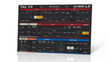
TAL-U-NO-LX is a beefed up variation on TAL's excellent (and free) TAL-U-NO-62, a lovingly realised clone of Roland's Juno-60. It's bigger, using up a lot more screen real estate and thus making it much easier to tweak, especially on the fly.
More importantly, though, the code has been reworked from the ground up and makes use of a zero-feedback delay filter design that makes this new version sound a lot more realistic.
TAL-U-NO-LX stays quite faithful to the spirit of the original Juno series and the sound is very good indeed. It has that Roland snap and spike, belting out sounds to set your fillings rattling.
FXpansion DCAM: Synth Squad

It took FXpansion a surprisingly long time to get into the commercial soft synth market, but when it finally did, it was with a collection of three instruments (plus a shell that enables you to layer them up, add effects and more).
The instruments in question are Strobe (an analogue-style subtractive model), Amber (for creating string machine sounds) and Cypher (a versatile beast that specialises in audio-rate modulation).
DCAM is full of nice touches - there’s a particularly impressive modulation system -and, taken as a whole, can produce a wide range of awesome sounds. It can be complex, but get to know it and you’ll have a synth friend for life.
READ: FXpansion DCAM: Synth Squad review
BUY: FXpansion DCAM: Synth Squad currently available from:
UK: Thomann | Gear4Music
USA: Sweetwater | Full Compass
FR: Thomann | Star's Music
FabFilter Twin 2

FabFilter Twin 2 sports three oscillators, four filters with a variety of modes, and a clever modulation routing system that gives you plenty of creative possibilities. This is all packed into a slick interface that makes the synth easy to use.
That said, Twin 2 is still relatively light on features in comparison to some of its rivals. However, what it lacks in breadth, it makes up for in depth. It’s great fun to program and play, and in terms of pure sonic beef, it even gives Sylenth1 a run for its money.
READ: FabFilter Twin 2 review
BUY: FabFilter Twin 2 currently available from:
USA: Sweetwater
u-he ACE

So called because it allows you to put Any Cable Anywhere, ACE is a semi-modular synth that doesn’t differentiate between audio signals and modulation sources. This gives you an enormous amount of flexibility when it comes to patch creation although, because ACE’s modules are pre-routed in a standard configuration, it’s also usable before you start playing with the cables.
ACE isn’t quite as accessible as u-he might claim - and it imposes a heavy CPU hit - but it’s still a winner. Why? Because it sounds gloriously analogue and, at just €69, comes at a fantastic price.
READ: u-he ACE review
Tone2 Electra2

Electra2 is the second generation of Tone2's ElectraX, a synthesiser workstation comprising four layers (each one effectively a whole synth in itself), designed to deliver synth sounds of pretty much every conceivable kind.
New features include an expanded library (1180 presets) plus a full preset browser with auditioning keyboard, expanded handling of imported samples, improved effects, five new filter types, and the addition of physical modelling synthesis.
Electra2 is a powerful synth with a lot going for it. The presets prove that it can throw heavy punches in almost any arena, adapting its synthesis style to even the broadest ambitions.
READ: Tone2 Electra2 review
Arturia CS-80V

Launched in 1977, Yamaha's CS-80 synth was a heavyweight in every conceivable way, and has since taken on classic status.
Arturia's emulation is now more than a decade old, so could almost be seen as a vintage software instrument, but with the company's TAE (True Analogue Emulation) technology at its core, the CS-80V remains a hugely popular plugin.
That, quite simply, is down to the fact that it does such a great job of emulating Yamaha's beast, nailing not only the sound of the oscillators, but also its signature ring modulator and pretty much every other aspect of its analogue tone. Sure, there are other synths out there that can produce similar results, but if you want to feel like you're playing and programming a slice of history, the CS-80V still has plenty to recommend about it.
Find out more about Yamaha CS-80V
---
BUY: Yamaha CS-80V currently available from:
UK: Gear4Music
USA: Sweetwater | Full Compass
FR: Woodbrass
GForce Software Oddity2

Released in 2002, the original Oddity perfectly captured the character of the original ARP Oddysey upon which it was based. And that must have posed a bit of a problem for GForce: how could something so on-the-nose be improved for v2?
Well, if Oddity sounded like a real Odyssey (which it did), then Oddity2 sounds almost like an entire revision history of the instrument, thanks to its greatly expanded filters, supercharged by the X-LFO and X-ADSR, which give it the ability it to produce sounds of far greater complexity than could ever be had from the original. Oh, and it's polyphonic now, too.
So, what we have here is a spot-on emulation of the classic ARP Odyssey in its various incarnations, with some very well thought-out new features as well. Essential.
READ: GForce Software Oddity2 review
BUY: GForce Software Oddity2 currently available from:
USA: Sweetwater
Rob Papen Blue II

The original Blue was built around what the developer called “crossfusion” synthesis, combining familiar analogue subtractive synthesis with old-school 6-operator FM, along with a bit of phase distortion and wave shaping. It also threw in such extra niceties as step sequencing, multistage envelope generators, dual effects processors and loads of additive and digital waveforms to complement the standard analogue fare.
In Blue II, each of the six oscillators now sports even more waveforms, more than double the number of filter modes, and double the number of effects slots. There are plenty of other new features, too, but the takeaway message is that Blue II sounds at turns lush, deep, complex and alive, or biting, aggressive and modern.
A truly sophisticated synth offering endless programming possibilities, Blue II is worth every penny.
READ: Rob Papen Blue II review
---
BUY: Rob Papen Blue II currently available from:
UK: Andertons Music | Thomann | Gear4Music
USA: Sweetwater | Full Compass
FR: Thomann
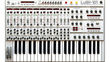
D16 Group Lush-101

Rather than create a literal clone of Roland’s SH-101, with Lush-101 D16 has doubled the number of envelopes and LFOs, made it 32-voice polyphonic and added modern refinements and effects.
Oh, and, crucially, LuSH-101 is actually a monster stack of eight SH-101s: each is called a Layer and all are operated totally independently, brought together - along with a useful collection of effects - at the built-in final mixer stage.
This is one seriously great-sounding synth. Whether you're after basses, chords, pads or anything in between, there are simply no weak links. Even after 30 years of progress, some great ideas just don't go out of fashion.
READ: D16 Group Lush-101 review
---
BUY: D16 Group Lush-101 currently available from:
USA: Sweetwater | Full Compass
Rob Papen Predator

On the surface, Predator's feature set looks very familiar: three oscillators are pumped through a multimode filter and a handful of modulation sources. These functions are augmented by an assortment of effects and the now-obligatory arpeggiator.
However, you shouldn't be fooled by this apparent simplicity: the devil, as they say, is in the details, and it's only when you start poking the parameters that Predator's powerful punch really becomes apparent.
It's easy to forge sounds of real depth and sophistication without getting sidetracked by arcane algorithms and impenetrable parameters. Needless to say, Predator comes packed with a plethora of presets from Papen himself.
Powerful, easy to get into and with awesome sounds, Predator is a no-brainer for dance musicians and a must-try synth for anyone else.
READ: Rob Papen Predator review
---
BUY: Rob Papen Predator currently available from:
UK: Andertons Music | Thomann | Gear4Music
USA: Sweetwater | Full Compass
FR: Thomann | Star's Music
Madrona Labs Aalto

Inspired by analogue synth legend Don Buchla's legendary and quirky units, Aalto is brimming with features that provide an alternative to common methods of sound design, composition and performance. It's a semi-modular instrument, so it offers a fixed number of synthesis components, but these can be freely patched together.
Right from first launch, it's obvious that we're in new territory here. Aalto's GUI is divided into two sections. The top half of the interface sports most of the modulation and control sources, while the lower half provides oscillator, filter and other audio-level modules.
Madrona Labs has gone out on a limb with an instrument that can at first seem intimidating, but really isn't too hard to grasp. It sounds rich, evocative and wonderfully weird at times -if you got into synths because you wanted to explore new sonic territory, check it out.
Arturia Oberheim SEM V

The SEM is legendary precisely because it does things differently to most other synths. The basic synth architecture is fairly standard: the SEM is a monophonic synth with two oscillators (pulse and sawtooth waves), two ADSD envelope generators and a sine wave LFO.
Needless to say, the SEM V's architecture is an accurate recreation of the SEM's set-up. Tune the VCOs, apply some envelope modulation to the filter and you're immediately in classic SEM territory, wallowing in fat basses and warm, funky leads.
As a straight emulation the SEM V ticks all the boxes, but the software has so much more to offer when you explore it in greater depth: small but effective additions to the SEM design, advanced voice editing features and, of course, an excellent polyphonic mode.
READ: Arturia Oberheim SEM V review
---
BUY: Arturia Oberheim SEM V currently available from:
USA: Sweetwater | Full Compass
FR: Star's Music
Native Instruments Razor

Razor is based on additive synthesis, with up to 320 partials (individual sine waves). While additive synthesis has a reputation for being a tad 'scientific', Razor is very friendly, presented in the guise of a typical modern synth, with two oscillators, twin filters, and three effects sections: Dissonance, Stereo and Dynamics.
You’ll find that ripping DnB/dubstep noises are shockingly easy to dial in, but bumpin' basses and sweet pads/leads are readily had too.
We'll admit that we were initially a tad sceptical about Razor, it being 'just' a Reaktor-based affair and entirely additive. However, it actually makes additive synthesis not just palatable but downright desirable.
Native Instruments Monark

Operating within NI's Reaktor or Reaktor Player, Monark emulates the classic Minimoog synth. It's faithful to the original save a few small differences, many of them behind the scenes. The Mini's selection of six waveforms are emulated (with Osc 3 getting a reverse saw that mirrors that of the other oscillators), and so are all six pitch ranges.
The filter section is the highlight of the instrument. Of course, the Mini's 24dB low-pass model is here and spotlighted, but you can also choose from two more low-pass filters (6 and 12dB) or a 12dB band-pass.
There are some other deviations from the original Minimoog architecture, too, but this is fundamentally a great emulation. Monark is in line with other modern vintage clones and sounds as good as - if not better - than, any of them.
Sonic Academy ANA

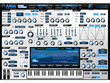
ANA is an acronym for 'Analogue Noise Attack', which refers to the three very different oscillator types found in Sonic Academy's 4-oscillator debut synth.
In addition to three standard ADSR envelopes (amp, filter and one assignable), ANA also offers a nifty G Envelope. Syncable, loopable and with up to 16 stages, this hand-drawn modulator can be used to create everything from rhythmic pseudo-sequences to rapid-fire trills.
Other mod sources include a couple of syncable LFOs and a pair of slots for routing external controls (and all internal modulators) to all viable targets. ANA's dual filters, meanwhile, can be run either in series or parallel.
Obviously, ANA isn't just another 'me too' virtual analogue synth, and the instrument is capable of some terrific sounds.
READ: Sonic Academy ANA review
iZotope Iris 2

With a slicker interface, improved effects, rejigged samples and preset library, and vastly extended modulation options, Iris 2 feels more like a synth in the conventional sense than the original Iris, which was decidedly esoteric in its presentation.
Nonetheless, the central conceit remains the same. You still have four sample layers (although all of them can now load any type of sample, rather than three sample layers and a dedicated sub oscillator), which are edited in the Spectrogram window.
The inclusion of the new classic oscillator bank and new modulation options take this plugin in new and exciting directions, building on its spectral foundations to deliver more 'music- friendly' sounds.
It can be a little demanding on the host CPU, but when a synth sounds this good, that's to be expected. Iris 2 is, without doubt, one of the finest virtual instruments ever made.
READ: iZotope Iris 2 review
BUY: iZotope Iris 2 currently available from:
UK: Andertons Music
USA: Sweetwater | Full Compass
u-he Bazille

Combining powerful digital oscillators with an analogue-style semi-modular architecture, Bazille is a sound designer's dream come true.
It's packed with an awful lot of stuff, yet still it manages to be more than the sum of its parts. Its clever architecture makes it fun and creative to program; its superb, utterly convincing 'analogue' sound marks it out as a brilliant production tool; and its broad array of features give it extraordinary flexibility and obvious longevity.
In fact, Bazille stands as a genuinely viable alternative to a hardware semi-modular system, being more powerful in some areas, and far cheaper and more convenient.
For synth connoisseurs, then, Bazille represents pure, unadulterated bliss.
READ: u-he Bazille review
Native Instruments Absynth 5

Absynth has traditionally had a reputation as the serious sound designer’s synth of choice (or one of them at any rate). Perhaps as a result, it’s also been perceived as slightly scary and intense.
The latest version (5) of the synth hasn’t really done much to change its image. With new effects and filter improvements, it can great even more complex tones than before but, although the Mutator effect enables you to morph a preset into something else just by choosing descriptive tags, the interface is still complex and intimidating. As always, though, the sound is first-rate.
Cakewalk Z3TA+2

It looked as if Z3TA+ was going nowhere (in terms of development at least), until v2 was unexpectedly released in 2011.
While the interface has had a significant functional and aesthetic makeover, the synthesis architecture hasn't changed. However, the sound quality stands up to other modern soft synths, especially since it's now more feasible to pile on lots of oscillators and leave the 2x oversampling on as standard.
Those who will get the most out of Z3TA+ 2 will be hardcore synthesists and sound designers, for whom a world of aural exploration awaits.
READ: Cakewalk Z3TA+2 review
BUY: Cakewalk Z3TA+2 currently available from:
USA: Sweetwater
Native Instruments FM8

Anyone who was using synths in the ‘80s will know all about Yamaha’s DX7, which became the FM (frequency modulation) synth that everyone wanted to own.
The FM8, which emulates said hardware, is now practically legendary too. Not only does it sound great, but it also makes the notoriously difficult process of FM programming much simpler, even going so far as to offer an Easy editing page for beginners. Those who want to get their hands dirtier can go the Expert page.
If you’ve had your fill of analogue-style synths, FM8 is a great place to go next.
REVIEW: Native Instruments FM8 review
Synapse Audio Dune 2

Dune 2 is a synth plugin that' built around Synapse Audio's eight-layer Differential Unison Engine concept.
Between its well-equipped oscillators and flexible zero-delay feedback filters, the overall sound of Dune 2 is distinctly clean and rich in character. This is definitely one of those all-rounders that can deliver most of the sounds you're ever likely to want from a synth, from lush pads to thick basses and soaring leads. As well as its extensive feature set, it also boasts impeccable sound quality and unbelievably low host system resource usage.
If the original Dune was something of an under-rated gem, the remake is surely destined for modern classic status.
u-he Zebra 2

Originally a word-of-mouth success on the Mac, Zebra has since earned its PC stripes, too, bringing its all-round awesomeness to a much wider audience.
It’s a wireless (no patch cables) semi-modular synth that supports a variety of techniques. Its main focus is on subtractive synthesis, but the inclusion of FM and additive elements means the tones you can get from this instrument are more complex than those that can be produced by many others.
The presets do a good job of showing off what Zebra is capable of, but this is also a powerful sound design tool, and one that can prove to be seriously addictive. It isn’t strictly a beginners’ synth, but pretty much anyone should be able to get decent results with it.
READ: u-he Zebra 2 review
Native Instruments Reaktor 5

Where to start with Reaktor? It’s best described as a cross-platform audio construction kit that enables you to create your own synths, samplers and effects by connecting modules in a graphical interface.
Useful module combinations can be saved as Macros; finished devices are known as Instruments; and combinations of instruments and effects can be racked together as Ensembles.
So, Reaktor is great for anyone who wants to build their own synths, but because there are so many high-quality user instruments available, it’s also appealing to anyone who just wants a source of high-quality sounds.
u-he Diva

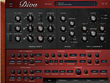
Two or three oscillators, multimode filters, dual envelope generators, a couple of LFOs and some effects. You've seen it all before - or so you might think.
Diva isn’t a clone of any specific synth; instead it provides elements from various famous instruments, all deeply analysed and meticulously recreated with excruciating attention to detail.
Diva's got everything you need to carve out any basic analogue sound, and then some. It's meat and potatoes with added spice, and digging beneath the surface, you'll find plenty of advanced features such as powerful modulation options and per-voice fine-tuning. If your computer is powerful enough you'd be crazy not to check this one out.
READ: u-he Diva review
ReFX Nexus2

Nexus2 isn’t as feature-packed as some of the synths in our rundown - indeed, some purists might argue that it isn’t really a ‘proper synth’ at all - but if your priority is to have great sounds out of the box, it’s hard to fault.
This is an instrument that’s specifically designed for producers of contemporary dance music, with the supplied Dance Vol 2 preset expansion pack containing 128 patches for use in trance, electro house and hard dance styles. Presets can be tweaked with a range of sound-shaping tools, and both the arpeggiator and trancegate are impressive. The Mix screen enables you to adjust individual layers - each patch can have up to four - and there are some good effects, too.
Slick and inspiring, Nexus2 definitely stands out.
READ: ReFX Nexus2 review
Image-Line Harmor

Image-Line positions Harmor as an 'additive/subtractive' synthesiser, but there's no doubt that the emphasis is on the former. Even typically subtractive elements like the filter are achieved via additive technology.
Some things are familiar, but Harmor can be a bit intimidating on first blush. However, it quickly reveals its secrets to those who persevere - we urge potential customers not to be put off by its unfamiliar look and terminology.
There is a richness in tone here that, frankly, took us by surprise, and sound designers will find a lifetime's worth of inspiration.
READ: Image-Line Harmor review
---
BUY: Image-Line Harmor currently available from:
USA: Sweetwater | Full Compass
Reveal Sound Spire

Listening to the demos and perusing the presets and parameters, you might be inclined to classify Reveal Sound's cross-platform VST/AU synthesiser as yet another trance 'n' dance machine. And it may indeed be geared up for just that, with its fat unison oscillators and big, brash, bombastic tones.
Yet it only takes a little digging to unearth some clever and unusual features that give Spire the ability to do things you wouldn't expect from a typical virtual analogue synth.
Although it does have some quirks, ultimately, Spire sounds terrific, generating everything from huge, brassy unison timbres to crystalline digital tones.
Native Instruments Massive

Massive is a hybrid synth that combines ideas and influences from all over the place. What’s more, it’s one of the most feature-packed synths we’ve ever encountered.
It comes with a massive array of wavetable oscillators (you can morph from one waveform to another using a dedicated knob), which makes it capable of producing everything from straight-ahead analogue-style tones to complex and evolving sounds. What’s more, it’s designed in such a way that it’s relatively easy to program (the clever modulation system helps in this regard, too).
The only downside is that, although some 600 presets come supplied (and are easy to navigate), not all of them show off Massive’s, er, massive potential, so you’ll need to get your hands a little bit dirty to get the best out of it.
LennarDigital Sylenth1

On the face of it, you might wonder why Sylenth1 is so popular. It looks like (and is) yet another virtual analogue subtractive synth with four oscillators, a couple of filters and a pretty basic modulation section. We’ve seen dozens of synths with similar feature sets - many of them freeware - so why bother with this one?
The answer becomes obvious within a few seconds of loading it up: Sylenth1 sounds incredible. It’s rich, detailed and full of analogue-style warmth. And while we find that many of the synths we review come with presets that fail to show off the instrument’s true capabilities, Sylenth1’s default bank is superb. A wide variety of sounds is on offer, including some beautiful impersonations of classics such as the TB-303 and Minimoog.
Sylenth1 has gradually become one of the synths that everyone feels they must try - make sure you don’t miss out.
Spectrasonics Omnisphere

How to describe Omnisphere? Spectrasonics say simply that it’s a ‘power synth’, and we think that’s a pretty good description. Based on the company’s STEAM engine, Omnisphere ships with a whopping 50GB sound library based on samples that were captured in all manner of different situations. We’re not talking just common-or-garden stuff here: everything from light bulb filaments to a burning piano was recorded.
This means that Omnisphere’s blistering presets are quite unlike anything you’ve heard before, while the level of synthesis options and other features on offer (effects, arpeggiators and more) is staggering.
The end result is a synth that really pushes the boundaries and, although you’ll need a fast computer and plenty of RAM to get the most out of it, it’s well worth paying a premium for.
Look out for a review of version 2 very soon.
READ: Spectrasonics Omnisphere review
BUY: Spectrasonics Omnisphere currently available from:
UK: Andertons Music | Gear4Music
USA: Sweetwater | Full Compass
FR: Star's Music
KV331 SynthMaster 2.5

SynthMaster 2.5 is a semi-modular synth that seems to have been designed to do anything and everything. The interface may not be the prettiest, but it's definitely intuitive and user-friendly, which counts for a lot more in our book.
This is one of the few instruments that we can confidently say is excellent for most categories of synth sound. The additive synthesis module is perfect for organ-type sounds as well as filthy, obnoxious, tearing bass textures, while the new vector synthesis module is ideal for evolving leads or pads. Plus, when you do want it to do bread-and-butter synth work, SynthMaster 2.5 is more than up to the job.
Many developers say that they've produced the one and only synth you'll ever need, and we've always felt that was a dubious claim. This is the first time that we agree.
Xfer Records Serum

A quick glance at the feature list makes it apparent that Serum represents an earnest attempt to produce nothing less than the world's most advanced instrument of its kind.
Its oscillators sound cleaner and slightly brighter than we're used to hearing from synth plugins; you can import your own audio to create custom wavetables; there's an incredible range of modulation options; the Unison feature gives you five stacking modes; and the effects are outstanding.
And that's just the start - Serum has so many deep and advanced features in its locker that we couldn't hope to cover them all here. We're not being overdramatic when we say that this is quite possibly the most sonically versatile synth we've ever used, and certainly one of the best sounding. Your votes have put it at the top of our chart, and it should be at the top of your must-buy list, too.
